When it comes to popular inventory solutions, Fishbowl Inventory is often the “brain” of the operation. It handles the complex calculations, tracks the stock levels, and integrates with your accounting software to keep the numbers straight. But even the most brilliant brain is limited if the “nervous system”—the way information travels from the warehouse floor to the office—is slow, clunky, and made of paper.
If your warehouse team is still wandering the aisles with a clipboard, a highlighter, and a prayer, you aren’t running a modern operation, you’re running a historical reenactment. To truly unlock the power of your investment, you need to go paperless.
Here is why mobile technology is the secret sauce that turns Fishbowl from a static database into a high-octane growth engine.
The “Paper Trail” Trap: The Hidden Costs of Analog Inventory
Most businesses start with paper because it’s familiar. You print a pick ticket, hand it to a team member, they check off the boxes, and they bring it back to a desk where someone types that data into Fishbowl. It feels like a process, but in reality, it’s a series of expensive bottlenecks.
1. The Data Latency Gap
When you rely on paper, your digital inventory is always “lying” to you. Between the moment a picker grabs a box and the moment a clerk updates Fishbowl, that inventory exists in a state of limbo. This data latency leads to overselling on e-commerce platforms and “ghost stock” that causes production delays.
2. The High Cost of “Walking and Typing”
Every time a warehouse worker has to walk from the back of a 50,000-square-foot facility to a central desktop terminal to check an order or update a count, you are paying for transit time, not productivity. If 10 employees spend just 30 minutes a day “walking to the computer,” you are losing 25 hours of labor per week!
3. The “Chicken Scratch” Factor
Human error is the natural enemy of inventory accuracy. A “7” that looks like a “1,” a misplaced decimal point, or a coffee stain on a pick ticket can result in shipping the wrong product to a customer. By the time the error is caught, the cost of the return shipping and the hit to your brand reputation have already eaten your margins.
What Does a “Paperless” Fishbowl Warehouse Actually Look Like?
Transitioning to a paperless warehouse doesn’t mean just “buying some tablets.” It means shifting your entire workflow to Point-of-Action data entry.
Real-Time Receiving
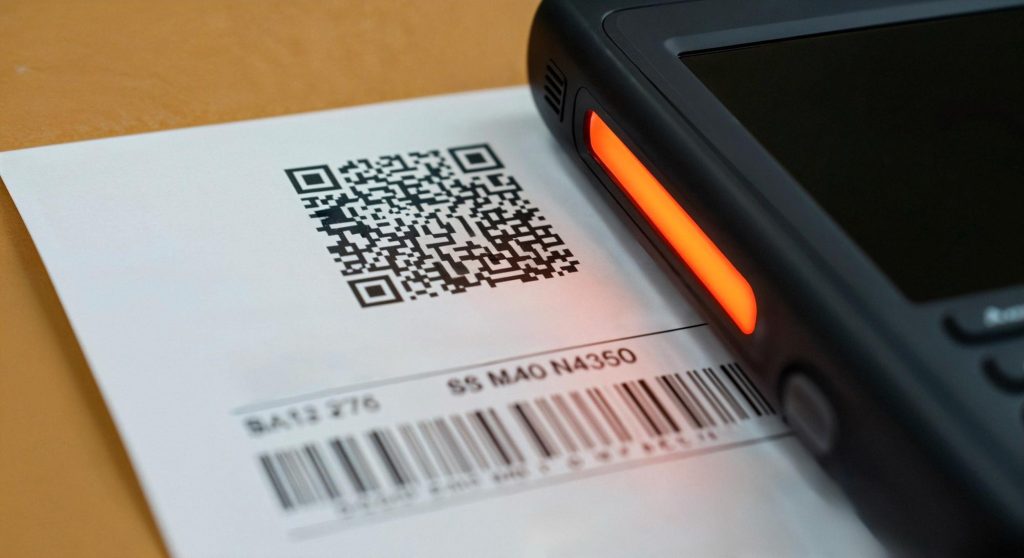
In a paper-based system, shipments often sit on the dock for hours (or days) waiting for someone to manually enter the packing slip. With a mobile solution integrated with Fishbowl, your team can scan items as they come off the truck. The moment the barcode is scanned, the inventory is live, the purchase order is updated, and the sales team knows the stock is available.
Validated Picking
This is where the ROI of mobile tech becomes undeniable. Instead of a picker “eye-balling” a part number, they scan the bin and the item. If they try to pick the wrong item or the wrong quantity, the mobile device alerts them immediately. You move from a “corrective” mindset (fixing errors after they happen) to a “preventative” mindset (stopping errors before they leave the building).
Dynamic Cycle Counting
Traditional inventory counts involve shutting down operations for a weekend while people count every single item. With mobile tech, you can implement Cycle Counting. Your team can count a single bin or a specific category during their downtime using their handheld devices. This keeps your Fishbowl data accurate 365 days a year without the need for a massive, disruptive “Big Count.”
Why Standard Fishbowl Isn’t Always Enough
While Fishbowl offers a mobile component, many high-volume businesses find they need something more robust, faster, and more intuitive. This is where LilyPad WMS enters the conversation.
Generic mobile interfaces often try to cram a desktop experience onto a small screen. This leads to frustrated employees and slow adoption. A truly effective mobile “secret sauce” should be:
- Purpose-Built: Designed for the thumb-driven, fast-paced environment of a warehouse.
- Hardware Agnostic: Able to run on ruggedized scanners, Android tablets, or even smartphones.
- Extensible: Capable of handling the specific “quirks” of your business, like custom tracking fields or unique labeling requirements.
How do I make Fishbowl Inventory paperless?
To go paperless, you must replace physical pick tickets and packing slips with a mobile inventory solution that integrates directly with the Fishbowl API. This allows for real-time scanning of barcodes for picking, packing, receiving, and shipping.
What are the benefits of barcode scanning in Fishbowl?
Barcode scanning eliminates manual data entry, which reduces human error by up to 99%. It also accelerates the “dock-to-stock” time, ensuring that inventory is visible in the system the moment it arrives.
Does Fishbowl work on tablets and smartphones?
Yes, Fishbowl can be accessed via mobile devices through its native apps or through enhanced third-party solutions like Lilypad WMS, which offer more streamlined workflows for high-volume environments.

The Strategic Path to Implementation
Going paperless can feel daunting, but it doesn’t have to happen overnight. Here is a 3-step roadmap for a successful transition:
Step 1: The “Clean Data” Audit
Before you buy a single scanner, you must ensure your data in Fishbowl is clean. Do your parts have unique barcodes? Are your location tags (Aisle, Rack, Shelf) clearly defined? Mobile tech only works if the digital map matches the physical world.
Step 2: Start with the “Input”
The easiest place to start is Receiving. By digitizing the way products enter your building, you ensure that every subsequent step—picking, moving, and selling—starts with a foundation of accuracy.
Step 3: Empower Your Super-Users
Identify the members of your warehouse team who are most tech-savvy. Let them pilot the mobile devices first. Their feedback will be vital in refining the workflow, and they will become the internal advocates who help train the rest of the staff.
To save even more time with a faster implementation, call on inventory experts like LilyPad to get your entire team trained and up-to-speed.
Takeaway
Warehouse efficiency is no longer a “nice-to-have”, it is a requirement for survival. With rising shipping costs and customer expectations for “Amazon-speed” delivery, you cannot afford to be slowed down by paper.
Fishbowl Inventory provides the data you need to run your business, but mobile technology provides the speed you need to win. By removing the clipboards and empowering your team with real-time, handheld tools, you aren’t just saving time—you’re building a scalable, resilient operation that can handle whatever the market throws at it.
Ready to see how Lilypad can unchain your team from their desks? Let’s get your warehouse moving at the speed of digital. Contact us today!