
There is a precise moment in every growing manufacturer’s lifecycle that feels like a scene from a movie: the moment your Direct-to-Consumer (D2C) brand gets its first massive B2B wholesale inquiry.
It starts with pure euphoria. “A boutique distributor wants 2,000 units? We’ve made it!”
Then, reality sets in.
That single buyer doesn’t want to check out with a credit card on your standard Shopify store. They want wholesale tier pricing, Net-30 payment terms, split-shipment dates, custom bulk packaging, and a PDF pro-forma invoice emailed to their procurement department before they’ll even sign a purchase order.
Suddenly, your sleek, modern production workflow—powered by the visual brilliance of Katana MRP—hits a wall of manual administrative chaos. Your sales team starts scribbling custom prices on sticky notes, your warehouse manager is constantly peppered with “Hey, do we actually have 500 units of SKU-B in stock?” messages, and someone on your team spends two hours every afternoon manually copy-pasting order details from PDFs into Katana.
Katana MRP is exceptional at being the central brain of your shop floor, master planning, and inventory control. But to capture wholesale margins without losing your mind (or your profit), you need to turn that central brain into a customer-facing B2B ordering machine.
Here is how you bridge the gap between back-office manufacturing control and front-end wholesale expansion.
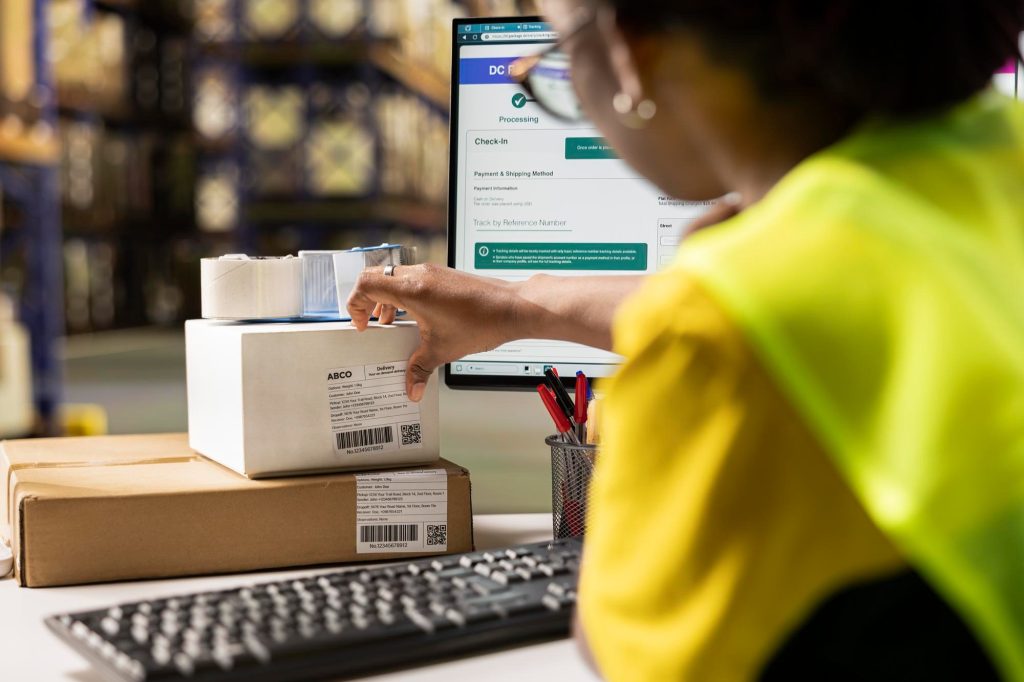
The Growth Paradox: Why D2C Workflows Fail in the B2B Arena
If you started out selling directly to consumers, your tech stack was built for simplicity:
- Customer visits website.
- Customer puts 1 item in cart at full retail price.
- Customer pays upfront.
- Katana syncs the order, deducts the stock, and tells the shop floor to pack it.
Wholesale, however, operates on entirely different physics. B2B buying isn’t emotional retail therapy done at 11:00 PM on a Sunday; it’s predictable, volume-driven, and highly customized B2B procurement.
When you try to force B2B buyers through standard D2C e-commerce checkout flows or rely on email chain orders, three major friction points instantly emerge:
1. The Spreadsheet and Email Circus
When wholesale clients place orders via email, text, or phone calls, your team becomes human data bridges. Manually entering a 40-line wholesale order into Katana takes time—and every keystroke is an opportunity for human error.
The Hot Sauce Debacle: Imagine a customer ordering 50 cases of Mild Habanero and 50 cases of Inferno Death Sauce. One mistyped SKU during manual entry, and suddenly a high school cafeteria gets shipped 50 cases of liquid fire. That’s a ruined customer relationship born entirely from copy-paste fatigue.
2. Custom Pricing Chaos
Customer A gets a 10% discount because they buy monthly. Customer B gets a 20% discount, but only on specific product categories. Customer C gets custom contract pricing negotiated six months ago.
When pricing rules live in spreadsheets or in your Head of Sales’ head, invoicing mistakes are inevitable. Overbill a customer, and you damage trust; underbill them, and you slice off your own margins.
3. “Do You Have This in Stock?” Ghosting
Wholesale buyers need confidence. If a retailer is planning a summer promotion, they need to know right now if you can fulfill 1,000 units by next Tuesday. If your sales reps have to pause the conversation, run into the warehouse, ask the shop foreman, and manually check Katana’s Available-to-Promise (ATP) inventory, the buyer might move on to a faster competitor.
The Solution: Extending Katana with a Dedicated B2B Ordering Engine
You don’t need to replace Katana, nor do you need to spend six figures on a bloated legacy ERP system that requires a team of consultants just to turn on.
Instead, the modern strategy is to pair Katana MRP with a dedicated B2B customer portal—like LilyPad Vortex—that exposes the right Katana data to your wholesale buyers in real time, while keeping your shop floor isolated and secure.
Here is what happens when you connect a modern B2B ordering portal directly to Katana:
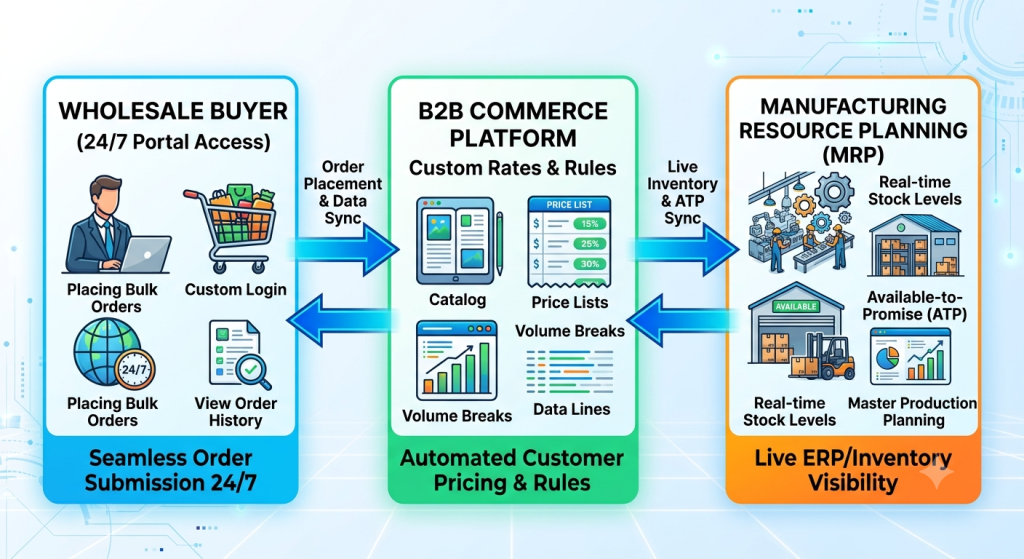
Real-Time “Available-to-Promise” (ATP) Visibility
Katana’s underlying power lies in its real-time master production schedule. It knows what raw materials are on hand, what finished goods are ready, and what work orders are scheduled to finish tomorrow.
By connecting Katana to a B2B portal, your wholesale buyers can log in and see live, accurate inventory levels based on Katana’s Available-to-Promise (ATP) data. They aren’t just seeing what’s sitting on the rack right now; they are seeing what you can legitimately fulfill.
Automated, Customer-Specific Price Lists
Instead of creating 50 different PDF price sheets, a connected portal reads your customer contacts and pricing rules directly. When Distributor Alpha logs in, they only see their negotiated $8.50/unit price. When Boutique Beta logs in, they see their standard $10.00/unit price with volume breaks applied automatically at 100+ units.
Zero guess-work for the customer. Zero pricing errors for your accounting team.
Frictionless Self-Service & Quick Reordering
B2B buyers are busy. They don’t want to schedule a 30-minute call just to restock inventory they buy every month. A modern B2B portal gives them a sleek, digital catalog where they can:
- Upload CSV spreadsheets for multi-line orders in seconds.
- Click “Reorder Last Shipment” with one tap.
- View past invoices, order statuses, and tracking numbers self-sufficiently.
Instant Sales Order Creation in Katana
When a wholesale buyer submits an order through the portal, it doesn’t rot in an inbox. It pushes instantly into Katana as a reserved Sales Order.
Katana immediately:
- Allocates finished goods to the order.
- Triggers a reorder point for raw materials if stock drops below threshold.
- Schedules a Work Order on the visual shop floor planner if manufacturing is required.
No manual data entry. No delays. From order placement to shop floor queue in under a second.
A Day in the Life: Before vs. After B2B Automation
To see the tangible operational difference, let’s look at a hypothetical coffee roaster company running on Katana MRP.
| Operational Task | The Old Way (Manual Wholesale) | The Modern Way (Katana + LilyPad B2B) |
| Placing an Order | Buyer emails a scanned PDF purchase order to the sales rep at 6:00 PM. | Buyer logs into the wholesale portal at 6:00 PM, selects their custom blend, and hits “Place Order.” |
| Checking Stock | Sales rep sees the email at 8:30 AM, walks out to the roastery to ask the head roaster if they have enough green beans for 300 lbs. | Portal automatically verifies Katana’s ATP stock and ingredient availability in real time. |
| Order Processing | Sales rep manually creates a Sales Order in Katana, carefully typing in custom pricing and shipping details (25 minutes). | Order instantly lands in Katana as an allocated Sales Order with accurate customer pricing (0 minutes). |
| Fulfillment | Roastery team prints a paper pick-list and manually updates Katana once packed. | Warehouse team picks the order using mobile barcode scanning (via LilyPad Warehouse), auto-updating Katana status. |
Result: The coffee roasting company cut their order-to-production time from hours down to seconds, freed up their sales team to focus on finding new accounts, and likely eliminated thousands of dollars in mispick/shipping errors.
Scaling Wholesale Without Sinking Operations
Expanding into wholesale should be a victory lap for your business, not an administrative sentence to hard labor.
Katana MRP gives you world-class visual planning, precise inventory control, and deep cost tracking. By extending that power with a dedicated B2B ordering interface designed for Katana, you give your wholesale buyers the modern, effortless shopping experience they expect—while keeping your operations tight, automated, and profitable.
The linked page provides a focused overview of withdrawal options and processing times for Australian players, including discussion of instant payout casinos and same day cashout practices. It covers common payment methods and the factors that influence how quickly funds clear for players. This resource can help readers compare processes and identify which methods tend to produce faster outcomes.
Stop copy-pasting spreadsheet rows and emailing manual PDF invoices. Let Katana handle the brain work, let a smart B2B portal handle the buying, and let your team focus on doing what they do best: building great products.
Ready to get started? Contact LilyPad today.