

In the everyday warehouse, there is a hidden expense that rarely appears as a line item on a P&L statement, yet it eats away at margins every single day. We call it the “Manual Tax.”
It’s the cost of a picker walking back to the office because a SKU was moved without being updated on a spreadsheet. It’s the cost of a shipping clerk squinting at a handwritten “7” that looks suspiciously like a “1.” It’s the cost of “tribal knowledge”—that one warehouse veteran who is the only person who knows where the specialty bolts are kept because they aren’t in the system.
If your warehouse still relies on paper pick tickets and manual data entry, you aren’t just behind the curve; you are actively paying for inefficiency. Moving to a Mobile Warehouse Management System (WMS) and rugged handheld scanners isn’t just a tech upgrade—it’s a financial strategy.
Here is how to calculate the return on investment (ROI) and why the switch from paper to mobile is the single most impactful move you can make for your bottom line in 2026.
The Anatomy of a Mis-Pick: What Does an Error Actually Cost?
Before we look at the savings of a mobile system, we have to look at the bleeding from the current one. Most warehouse managers estimate the cost of a “mis-pick” based only on the time it takes to put the item back.
The reality is much more expensive. Industry data for 2026 suggests the average cost of a single mis-pick is between $35 and $50. This includes:
- Double Labor: Picking, packing, and shipping the wrong item, then doing it all again for the correct one.
- Shipping Costs: Paying for outbound shipping of the error, the return shipping, and the second outbound shipment.
- Customer Service: Staff time spent fixing the mistake.
- Brand Erosion: The customer may not return.
If your warehouse processes 500 orders a day with a 2% error rate, you are losing roughly $500 per day to mis-picks alone — about $130,000 per year. A mobile WMS with barcode validation reduces this error rate to near zero.
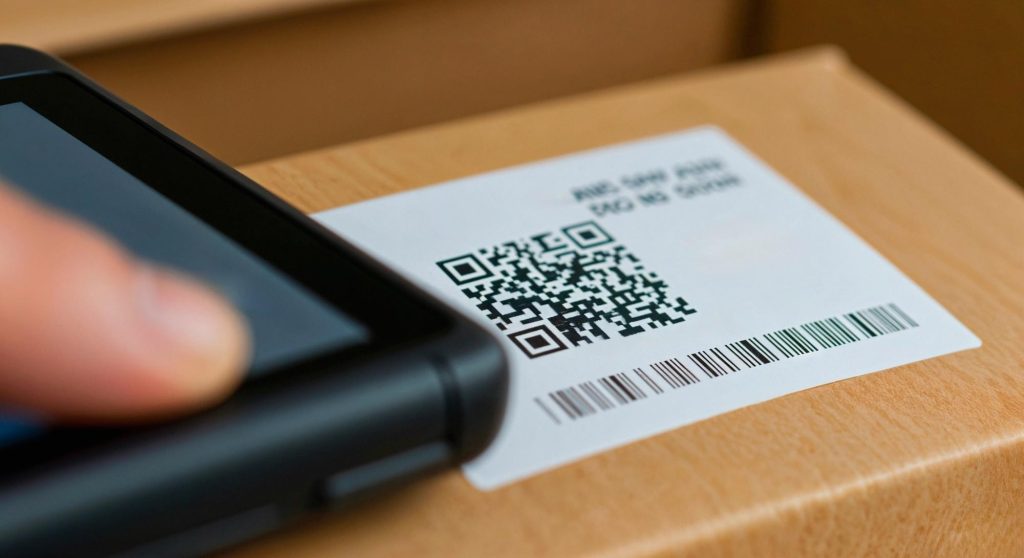
Breaking the “Tribal Knowledge” Cycle
One of the greatest risks to a growing business is reliance on tribal knowledge. When inventory lives on paper and in employee memory, you cannot scale.
The Paper Problem: A new hire shadows a veteran for weeks.
The Mobile Solution: Directed Picking tells workers exactly where to go and calculates the most efficient path.
Onboarding time drops from weeks to hours.
Calculating the ROI: The Math of Efficiency
The most immediate ROI comes from Picks Per Hour (PPH). Paper pickers: 60–80 PPH. Mobile pickers: 120–150 PPH.
Annual Savings = (Total Annual Picks ÷ Manual PPH − Total Annual Picks ÷ Mobile PPH) × Hourly Wage
Example: 250,000 picks/year at $22/hr:
- Manual (70 PPH): 3,571 hours
- Mobile (130 PPH): 1,923 hours
- Total Savings: 1,648 hours = $36,256/year
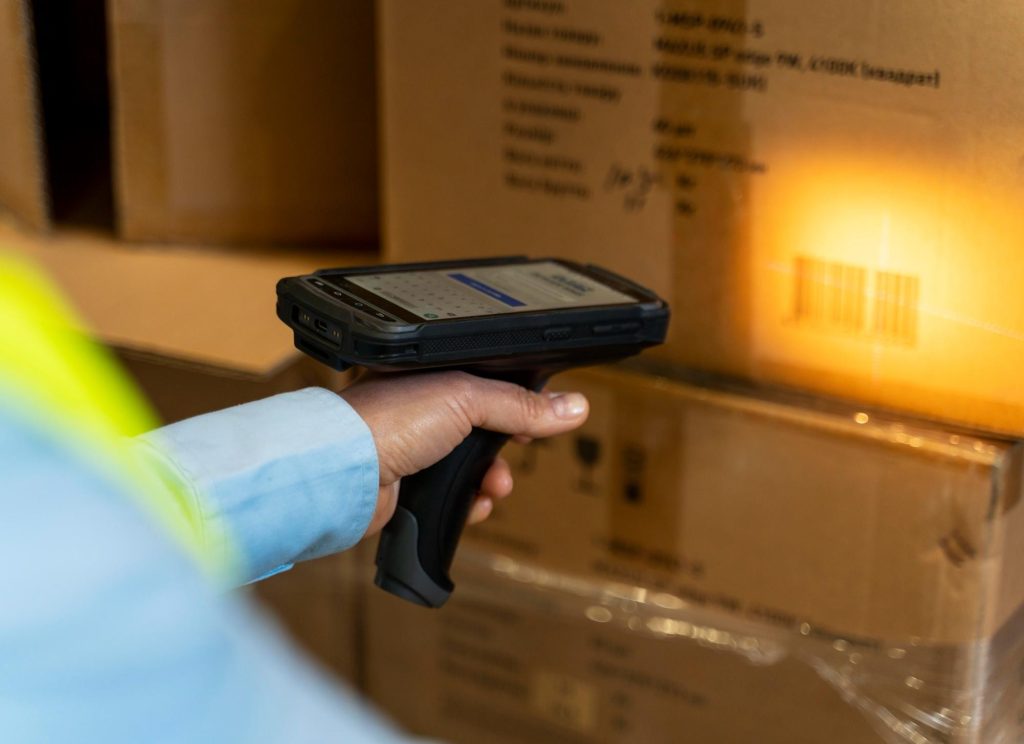
Hardware Selection: Why Your Smartphone Isn’t a Scanner
Consumer devices lack industrial scan engines capable of reading damaged barcodes at distance.
- Durability: Survives drops and freezer environments
- Ergonomics: Prevents repetitive strain
- Battery Life: Hot-swappable batteries for full shifts
The Implementation Roadmap
- Labeling Audit
- Hardware Provisioning
- ERP Integration
- UAT & Training
Conclusion: 18-Month Payback
Most businesses achieve full ROI within 12–18 months. Beyond the math: happier employees, calmer managers, and reliable orders.
Paper is for planes and sketches — not warehouses. Get in touch today and see what a proper WMS can do.