
Practical tools that improve accuracy, speed, and visibility without enterprise complexity
Small and mid-sized warehouses are being asked to do more than ever. Faster fulfillment, tighter margins, higher customer expectations, and leaner teams have become the norm—not the exception.
The mistake many SMBs make is assuming they need more tools to keep up. In reality, they need the right tools, working together, and actually being used.
The most effective SMB warehouses don’t chase enterprise-level complexity. They invest in tools that improve accuracy, remove guesswork, and fit the way work really happens on the floor.
Here are the 10 inventory tools that consistently make the biggest difference for SMB warehouses in 2026.
1. Inventory Management Software (IMS): The Foundation
Everything starts with a solid inventory management system.
An IMS is the system of record for what you have, where it’s located, and what’s available. Without it, every other tool becomes a workaround. With it, inventory stops being a mystery and starts becoming a reliable input for decisions.
For SMBs, popular inventory solutions like Fishbowl or Katana provide a robust feature set that benefits inventory-based businesses.
For SMBs, the key isn’t advanced features—it’s:
- Real-time quantity tracking
- Location-based inventory
- Clear visibility into available vs committed stock
If inventory data can’t be trusted, nothing built on top of it will be either.
2. Barcode Scanning Tools
Manual data entry is one of the fastest ways to lose inventory accuracy.
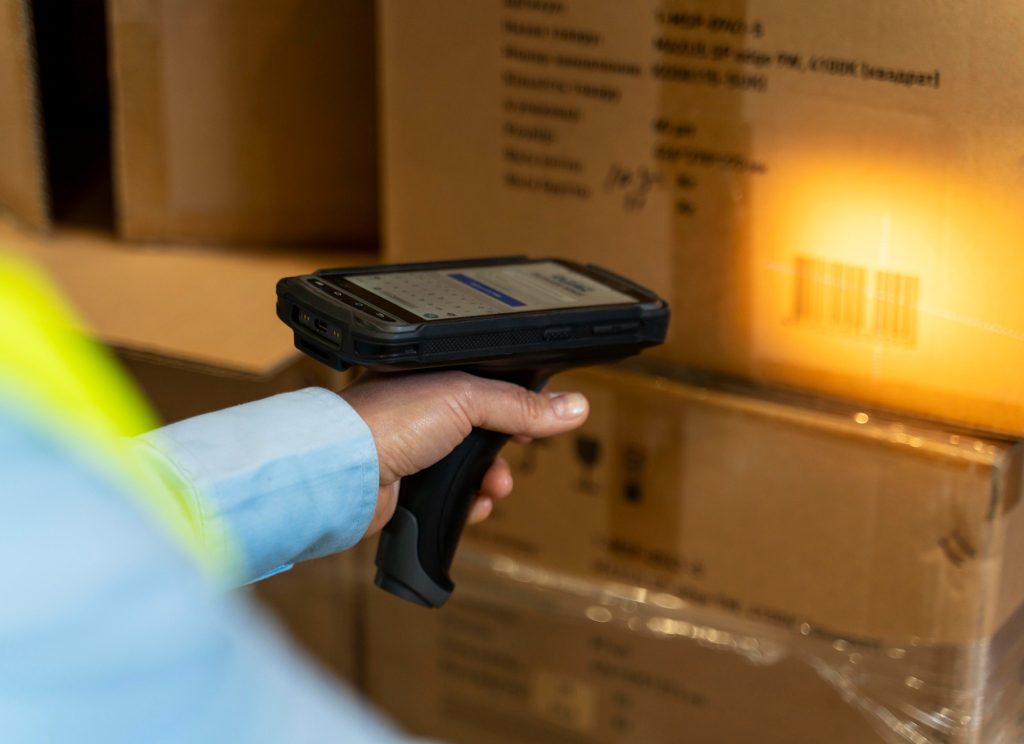
Barcode scanning removes guesswork at the most critical moments: receiving, putaway, picking, and counting.
Whether you’re using dedicated scanners or mobile devices, scanning ensures inventory changes are recorded when they actually happen—not later.
For SMB warehouses, scanning doesn’t need to be fancy. It needs to be:
- Fast
- Reliable
- Easy for new hires to learn
Accuracy improves not because people try harder—but because the system makes the right action easier.
3. Mobile Inventory Apps
Warehouse work doesn’t happen at a desk.
Mobile inventory tools allow teams to receive, move, pick, and count inventory directly from the floor. This eliminates paper, reduces backtracking, and keeps data current during the busiest parts of the day.
For SMBs, mobile tools are often the difference between, “we’ll enter it later” and “It’s already done”.
Offline capability, simple interfaces, and guided workflows matter far more than flashy features.

4. Location & Labeling Tools
Every warehouse starts with informal location knowledge. As soon as the business grows, that knowledge becomes a liability.
Location and labeling tools give inventory a permanent home. Bin labels, shelf labels, pallet IDs, and consistent naming conventions turn the warehouse into a map instead of a memory test.
This reduces:
- Pick time
- Training time
- Misplaced inventory
- Dependency on specific employees
If someone can’t find an item without asking, the system isn’t doing its job yet.
5. Cycle Counting Tools
Annual physical counts are disruptive, stressful, and increasingly unnecessary for SMBs.
Cycle counting tools allow teams to count small portions of inventory regularly without shutting down operations. Over time, this keeps accuracy high and catches issues early—before they spiral.
The best cycle counting tools:
- Prioritize high-movement items
- Track discrepancies over time
- Make counting part of normal work
Accuracy becomes a habit, not a once-a-year event.
6. Inventory Visibility Dashboards
Data alone doesn’t help—visibility does.
Dashboards turn raw inventory data into insight. For SMBs, this doesn’t mean dozens of charts. It means seeing the numbers that actually drive decisions, such as:
- Inventory accuracy
- Stockouts and backorders
- Aging and excess inventory
- Inventory turns
Good dashboards reduce meetings, emails, and “just checking” conversations. Everyone looks at the same numbers and moves faster because of it.
7. Replenishment & Reorder Point Tools
Manual purchasing decisions don’t scale.
Replenishment tools use inventory levels, lead times, and demand patterns to signal when it’s time to reorder—before stockouts happen. This removes emotional decision-making and replaces it with consistency.
For SMB warehouses, these tools help:
- Prevent emergency buys
- Reduce overstocking
- Smooth purchasing cycles
The result is better cash flow and fewer surprises.

8. Integrations That Actually Matter
Inventory doesn’t exist in isolation.
The most helpful integrations for SMB warehouses typically include:
- Accounting systems
- Ecommerce platforms
- Shipping tools
- Manufacturing or assembly workflows
When systems don’t talk to each other, teams fill the gaps with spreadsheets and manual reconciliation. Real-time integrations eliminate duplicate work and keep everyone aligned.
If an “integration” still requires exports and imports, it’s not really integrated.
9. Reporting & Audit Trail Tools
At some point, someone will ask, “why does this number look wrong?”
Reporting and audit tools answer that question quickly. Adjustment histories, transaction logs, and user accountability help SMBs:
- Support audits
- Resolve discrepancies faster
- Build trust in inventory data
Without audit trails, inventory issues turn into finger-pointing instead of problem-solving.
10. Training & Support Tools (The Most Overlooked)
Even the best tools fail without understanding.
SMB warehouses change constantly—new hires, new products, new workflows. Training and ongoing support tools ensure inventory processes stay consistent even as the business evolves.
The goal isn’t perfection, it’s shared understanding. Warehouses that invest in training early spend far less time fixing mistakes later.
Bringing It All Together
Most SMB warehouses don’t need ten separate systems to do all of this.
The majority of the tools listed above—inventory management, mobile scanning, location control, cycle counting, dashboards, integrations, replenishment logic, audit trails, and workflow guidance—can be found in a single, unified platform like LilyPad WMS.
LilyPad Applications’s WMS is designed specifically for SMB warehouses that want:
- Real-time, location-based inventory accuracy
- Mobile-first workflows for receiving, picking, and counting
- Barcode scanning that fits real warehouse motion
- Visibility across inventory, orders, and integrations
- Tools that reinforce best practices instead of fighting them
Rather than stitching together point solutions, LilyPad WMS brings these core inventory tools into one system that grows with the business—without forcing enterprise complexity on SMB teams.
Final Thought
The most successful SMB warehouses in 2026 won’t be the ones with the most software. They’ll be the ones with the right tools, used consistently, by teams that trust the system.
Inventory tools should reduce friction, not add to it. When they do, inventory stops being a daily problem—and starts becoming a competitive advantage.